What does New York look like?
New York City doesn’t have just one look—it’s a massive visual chameleon depending entirely on where you stand, what direction you look, and even the time of day.
Because the city is a collection of thousands of contrasting textures, it helps to break it down into its distinct aesthetic layers:
1. The Sky-High Geometry
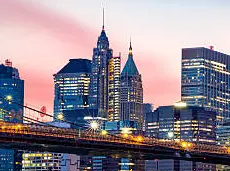
When most people think of New York, they think of the iconic Manhattan skyline. It looks like a dense forest of glass, steel, and stone jutting straight out of the water. Look across the East River, and you will see historic brick-and-cable architectural marvels like the Brooklyn Bridge framed against modern glass towers. Up close, the streets feel like deep geometric canyons where sunlight cuts through in dramatic, sharp shafts between skyscrapers.
2. The Overwhelming Glow
At street level in Midtown, New York looks incredibly bright, fast, and sensory. In Times Square, the architecture disappears behind massive, wrap-around LED billboards that cast a permanent, technicolor neon glow over the crowds below. At night, it’s bright enough to read a book on the street. Yellow cabs, moving digital displays, and streams of pedestrians create a blur of non-stop motion.
3. The Natural Sanctuary
Right in the middle of all that hard architecture is Central Park, a massive, rectangular emerald oasis. It provides a stark visual contrast: rolling green lawns, quiet lakes, and winding pathways framed perfectly on all sides by a border of towering skyscrapers. In the autumn, the park turns into a brilliant sea of burnt orange, gold, and deep red, creating one of the most beautiful natural landscapes hidden inside a concrete city.
4. The Gritty, Historic Neighborhoods
Away from the skyscrapers of Midtown, neighborhoods like the West Village, SoHo, and parts of Brooklyn have a completely different, historic look. Here, New York looks low-rise and charming:
Cobblestone streets lined with historic leafy trees. Classic brownstone apartments with distinctive iron fire escapes zigzagging down brick facades. Industrial cast-iron buildings with large loft windows that hint at the city’s artistic past.
5. The Underground Pulse
Below the surface, New York has a raw, industrial aesthetic. The subway stations look utilitarian, with white subway tiles, heavy steel pillars painted in dark colors, concrete platforms, and vintage mosaic signs pointing the way to trains that are covered in a layer of urban grit.
Ultimately, New York looks like a beautiful collision of the historic and the ultra-modern—a city built vertically where millions of different lives and cultures overlap on every single corner.